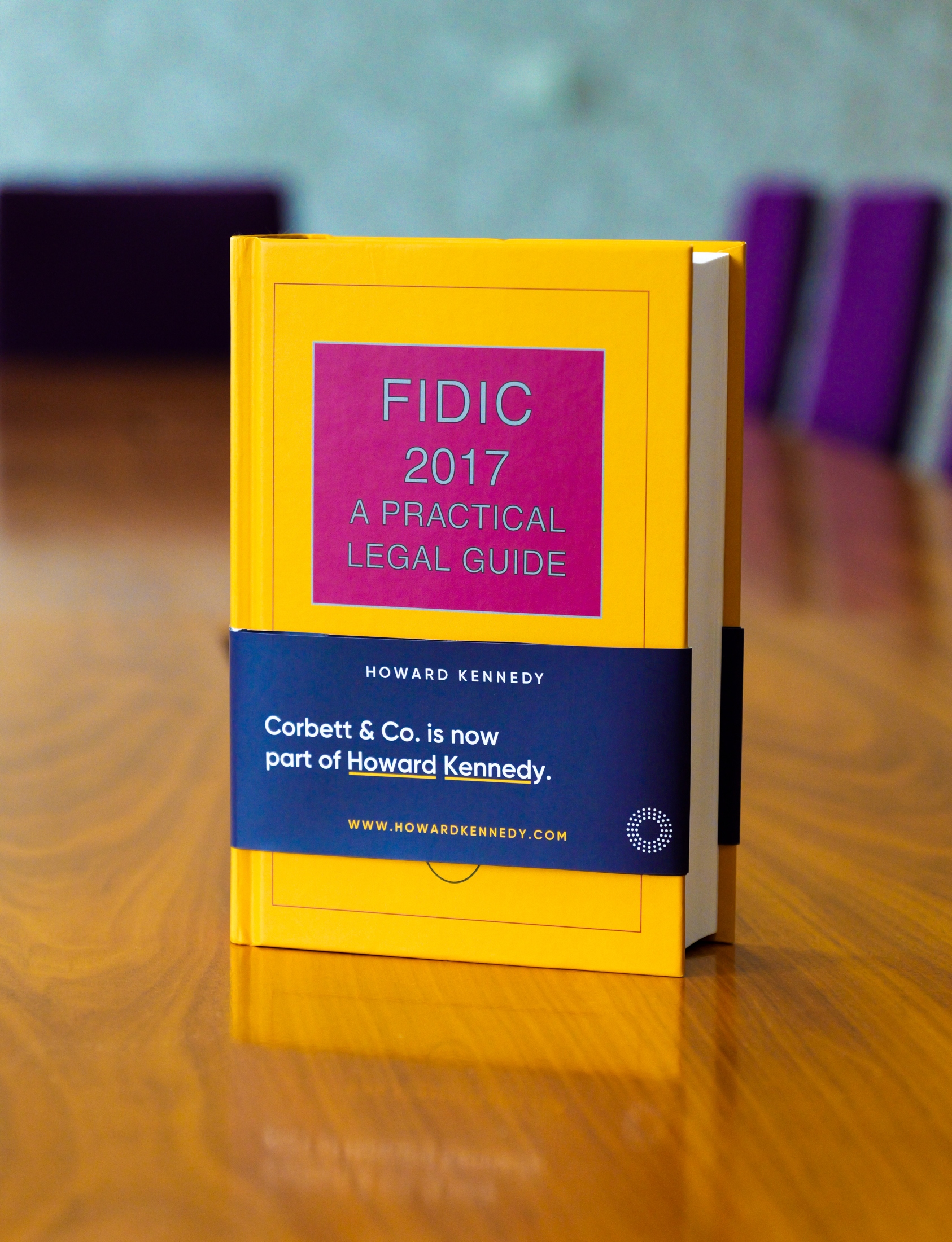
Celebrating Five Years of FIDIC 2017: A Practical Legal Guide

November 2025 marks five years since the International Construction team at Howard Kennedy LLP published FIDIC 2017: A Practical Legal Guide, which is praised for clarity, depth, and practical utility, becoming an essential resource for administering complex FIDIC contracts and avoiding disputes.

By |12/11/2025|featured, Knowledge Hub|Comments Off on Celebrating Five Years of FIDIC 2017: A Practical Legal Guide

2017 Suite: Commentary on Clause 04 – The Contractor

Clause 4 changes include defining 'fitness for purpose' in Employer's Requirements, adjusting the Performance Security, handling communications by the Contractor's Representative, setting subcontracting limits, enhancing health and safety obligations, redefining unforeseeable conditions, and increasing Contractor risk for access routes.

By |13/11/2024|Commentaries on the 2017 Suite, Knowledge Hub|Comments Off on 2017 Suite: Commentary on Clause 04 – The Contractor

FIDIC’s Emerald Book – A contractor’s charter or optimum risk allocation?

Is FIDIC’s new Emerald Book overly contractor-biased or does it offer pragmatic risk allocation for underground works? This article compares its benefits and risk distribution with the unamended FIDIC Yellow Book, especially regarding employer risks in claim-prone areas.

By |10/03/2020|Arbitration, featured, FIDIC, Knowledge Hub|Comments Off on FIDIC’s Emerald Book – A contractor’s charter or optimum risk allocation?

1999 Suite: Commentary on Clause 17 – Risk and Responsibility

Clause 17 covers risk and responsibility, indemnities, liability limitations, and intellectual property rights. The Contractor bears risk during execution and defect remedy periods, with risk transferring to the Employer upon issuing the Taking-Over Certificate. Risk allocation depends on governing law.

By |04/04/2019|Commentaries on the 1999 Suite, Delay, English Law, featured, Knowledge Hub|Comments Off on 1999 Suite: Commentary on Clause 17 – Risk and Responsibility

1999 Suite: Commentary on Clause 08 – Commencement, Delays, and Suspension

Clause 8 covers the start of works, time for completion, delays, extensions, and suspension of works. It includes provisions for commencement, completion, progress, delay damages, and suspension, with updates from the 4th Edition Red Book.

By |14/11/2018|Commentaries on the 1999 Suite, Delay, English Law, featured, Knowledge Hub|Comments Off on 1999 Suite: Commentary on Clause 08 – Commencement, Delays, and Suspension

1999 Suite: Commentary on Clause 06 – Staff and Labour

Clause 6 covers Staff and Labour, requiring the Contractor to comply with local laws, pay fair wages, provide accommodation, ensure health and safety, and maintain proper records. It also restricts recruitment from the Employer’s personnel and mandates qualified supervision.

By |14/11/2018|Commentaries on the 1999 Suite, featured, Knowledge Hub|Comments Off on 1999 Suite: Commentary on Clause 06 – Staff and Labour

2017 Suite: Commentary on Clause 21 – Disputes and Arbitration

Clause 21 introduces a standing Dispute Avoidance/Adjudication Board (DAAB) instead of an ad-hoc DAB. The DAAB is appointed at the outset, assists in dispute avoidance, and its decisions are binding. The amicable settlement period is reduced to 28 days.

By |27/01/2018|Commentaries on the 2017 Suite, Dispute Boards, Knowledge Hub|Comments Off on 2017 Suite: Commentary on Clause 21 – Disputes and Arbitration

1999 Suite: Commentary on Clause 19 – Force Majeure

Clause 19 covers Force Majeure and release from performance, with broader definitions than typical laws. It prescribes detailed insurance requirements, reducing flexibility. The Contractor bears most obligations, necessitating careful amendments and professional advice to avoid misunderstandings and ensure proper incorporation into contracts.

By |28/09/2017|Commentaries on the 1999 Suite, featured, Knowledge Hub|Comments Off on 1999 Suite: Commentary on Clause 19 – Force Majeure

All Damage Is In A Sense Consequential – So What In Law Are Consequential Losses?

English courts have historically held 'consequential loss' to be synonymous with 'indirect loss'. However, a recent case questions this position. It is also worth nothing that courts in different countries interpret 'consequential loss' differently from English courts.

By |03/08/2017|English Law, featured, Knowledge Hub|Comments Off on All Damage Is In A Sense Consequential – So What In Law Are Consequential Losses?
Go to Top